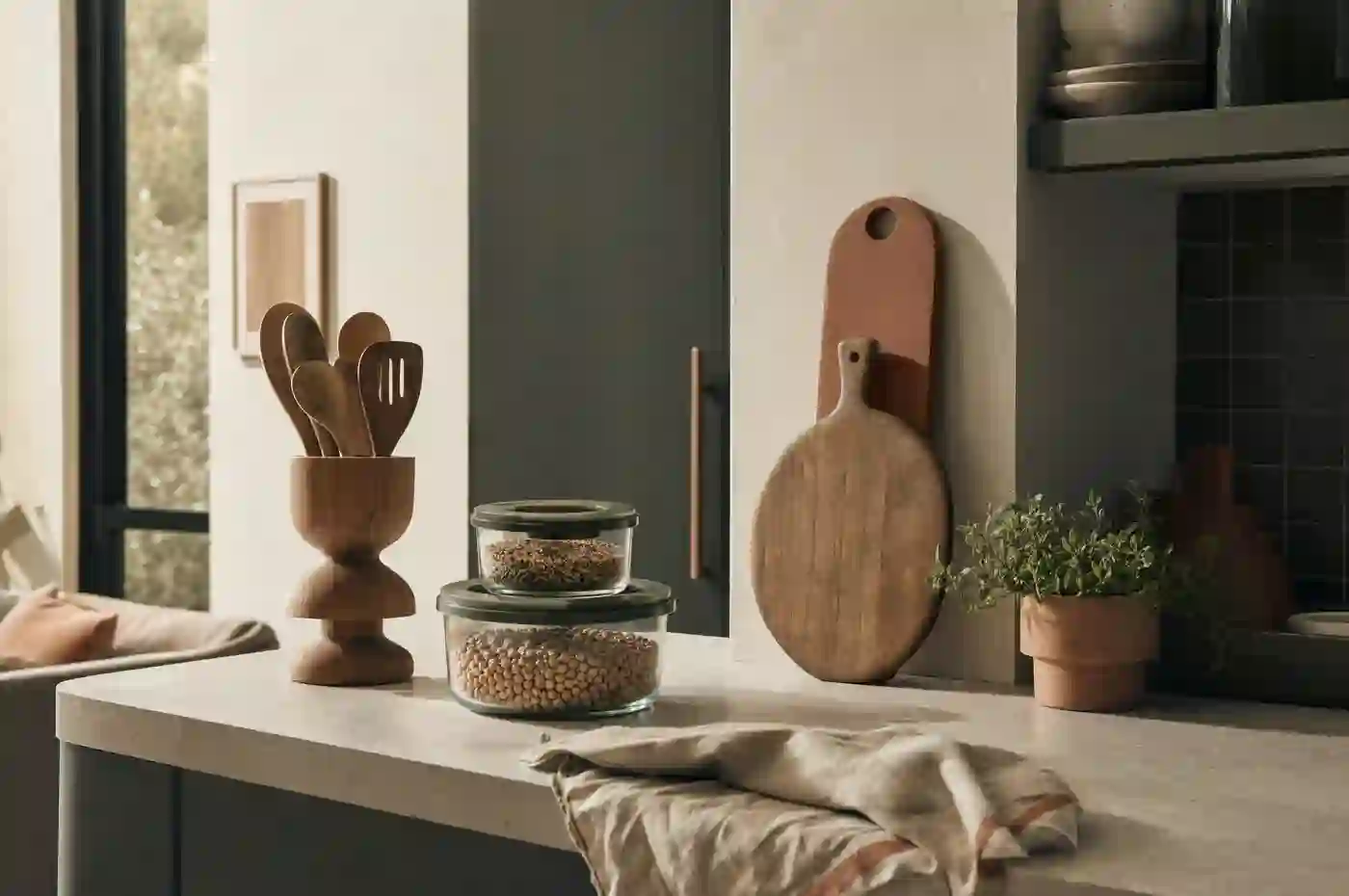
The kettle takes up one corner, the chopping board barely fits beside the sink, and opening a cupboard means moving three other things first.
Small kitchens have their challenges, especially when you cook regularly. But more cupboards or another set of organisers aren't always the answer.
Sometimes, a few changes to where you keep things make the biggest difference.
Here are seven small kitchen organisation ideas worth trying before buying anything new.
1. Make use of the walls, not only the countertops
Look around your kitchen. Is there an empty wall above the counter? Unused space inside a cupboard door? A little room beneath a shelf?
These overlooked spots are worth considering.
A wall rail for cooking utensils, a magnetic knife strip installed safely or a few well-placed hooks might free up valuable worktop space.
Keep everyday items within easy reach without crowding the area where you prepare meals.
One thing to remember: avoid filling every wall with storage. Too many hanging items make a small kitchen feel busier, especially when they're difficult to clean around.
Choose the spots where extra storage genuinely helps.
2. Stop fighting with mismatched containers
We've all opened a cupboard and found containers stacked at odd angles, lids hiding at the back and half-empty packets falling over.
Before investing in new kitchen storage containers, take everything out and see what's already there.
Group similar foods together. Check which containers fit your shelves properly. Get rid of damaged pieces and containers without matching lids.
If you're replacing them, look for stackable shapes suited to your cupboard dimensions.
Square or rectangular containers often fit neatly beside one another, although the best choice depends on your shelf measurements.
And don't feel pressured to decant every ingredient into matching jars. Keep ingredients in their original packaging when it's easier, especially if you need cooking instructions, dates or allergen information.
3. Keep daily essentials where you naturally reach for them
Think about your morning routine.
You grab a mug, make coffee, prepare breakfast and reach for the same few utensils.
If your everyday mug is behind the special occasion glasses, you're making extra work for yourself.
Move frequently used items to the easiest shelves and drawers. Store things you rarely need farther back or higher up.
- Coffee mugs near the coffee maker
- Everyday plates close to the dishwasher or drying rack
- Cooking utensils near the preparation area
- Baking equipment together in a less frequently used cupboard
Keep heavy items on lower, sturdy shelves rather than overhead.
A kitchen works better when storage follows your habits instead of forcing you to change them.
4. Choose kitchen tools with more than one purpose
Small drawers fill up quickly.
Before buying another clever kitchen gadget, think about whether something you already own does the same job.
A sturdy mixing bowl works for preparing ingredients, mixing batter and serving salads. A good baking tray handles more meals than a specialised tool designed for one recipe.
This doesn't mean avoiding every specialised gadget. If you use something regularly and it saves you effort, it deserves consideration.
Ask yourself where a new tool will live before bringing it home.
5. Put awkward little gaps to work
The narrow space beside a fridge. The empty section between a cabinet and the wall. The cupboard where chopping boards keep falling over. These areas often hold more potential than expected.
A slim storage trolley might suit a suitable gap. A vertical divider helps keep trays and boards upright. Small shelf risers offer another way to separate items where height allows.
Measure first, including the clearance needed to pull items out.
Avoid storage near heat sources or in areas where it blocks ventilation, appliances, walkways or cupboard doors.
Not every gap needs filling. Choose solutions suited to the space rather than squeezing in extra storage for the sake of it.
6. Give yourself room to prepare food
A clear section of countertop makes cooking feel less frustrating.
You shouldn't need to move the toaster, a fruit bowl and three containers before chopping vegetables.
Start by clearing one part of your worktop. Keep only the appliances and essentials you use regularly. Move occasional items into cupboards where practical.
If space allows, leave enough room for a chopping board and ingredients. This becomes your main preparation area.
Even a modest stretch of clear counter makes a difference when you're preparing dinner after a long day.
7. Buy for your kitchen, not someone else's
It's easy to see a beautifully organised kitchen online and want the same storage containers, shelves or drawer inserts.
But the organiser in the photo doesn't necessarily fit your cupboards, your budget or your daily habits.
Before buying, check three things:
- Does it solve a problem I regularly have?
- Do I know exactly where it will go?
- Will using and cleaning it be straightforward?
If you're unsure, wait. Try rearranging what you already own first. You might find you don't need anything extra.
Start with one annoying little problem
You don't need to reorganise your whole kitchen this weekend.
Start with the drawer where everything gets stuck. The cupboard where lids keep falling out. Or the counter where there's never enough room to make lunch.
Fix one thing and see how your routine feels.
A good small kitchen isn't the one with the most organisers. It's the one where cooking dinner doesn't feel like moving house every evening.